



The Umbrella Academy isn’t just about superheroes; it’s about what happens when children raised in a pressure cooker of trauma grow into adults who can barely hold themselves together. Reginald Hargreeves (Colm Feore) didn’t nurture his adopted brood — he weaponized them. The result is a family with brilliant siblings all around, but it’s also broken and one bad day away from disaster.
They save the world, but mostly because they’re the ones that put it in danger in the first place. Even more, their biggest showdowns are with each other. So which one is most likely to go full villain? Here’s the ranking, from least to most likely to snap.
Luther (Spaceboy)

Luther (Tom Hopper) has the size and strength of a villain, but emotionally, he’s the family’s biggest softie. Branded Number One, turned into a human-ape hybrid by Reginald’s serum, and exiled to the moon on a mission that never mattered, his life has been defined by obedience. Those choices left him lonely, uneasy in a body he never asked for, and still chasing the approval his father withheld.
He looks imposing, but the truth is sadder: Luther isn’t after control, he simply wants to belong. So, if he ever went dark, it wouldn’t be out of a hunger for power — it would be because someone exploited his loyalty. More pawn than mastermind, Luther is too tethered to family to become a true villain.
Diego (The Kraken)

Diego’s temper makes him seem like the sibling most likely to snap. Think of his vigilante crusade in Season 1 or his near-mutiny in Season 2. But beneath the knives and bravado is someone shaped by insecurity. Always in Luther’s shadow and dismissed by Reginald, Diego (David Castañeda) invented his own identity: the lone-wolf hero.
That chip on his shoulder makes him reckless, even self-destructive. Still, what drives him isn’t a lust for power — it’s recognition. Diego wants to be the one who saves people, the one who proves he was never Number Two in spirit. Embracing villainy would mean abandoning the very thing that defines him, which is why, despite his temper, he’ll never fully break bad.
Allison (The Rumor)
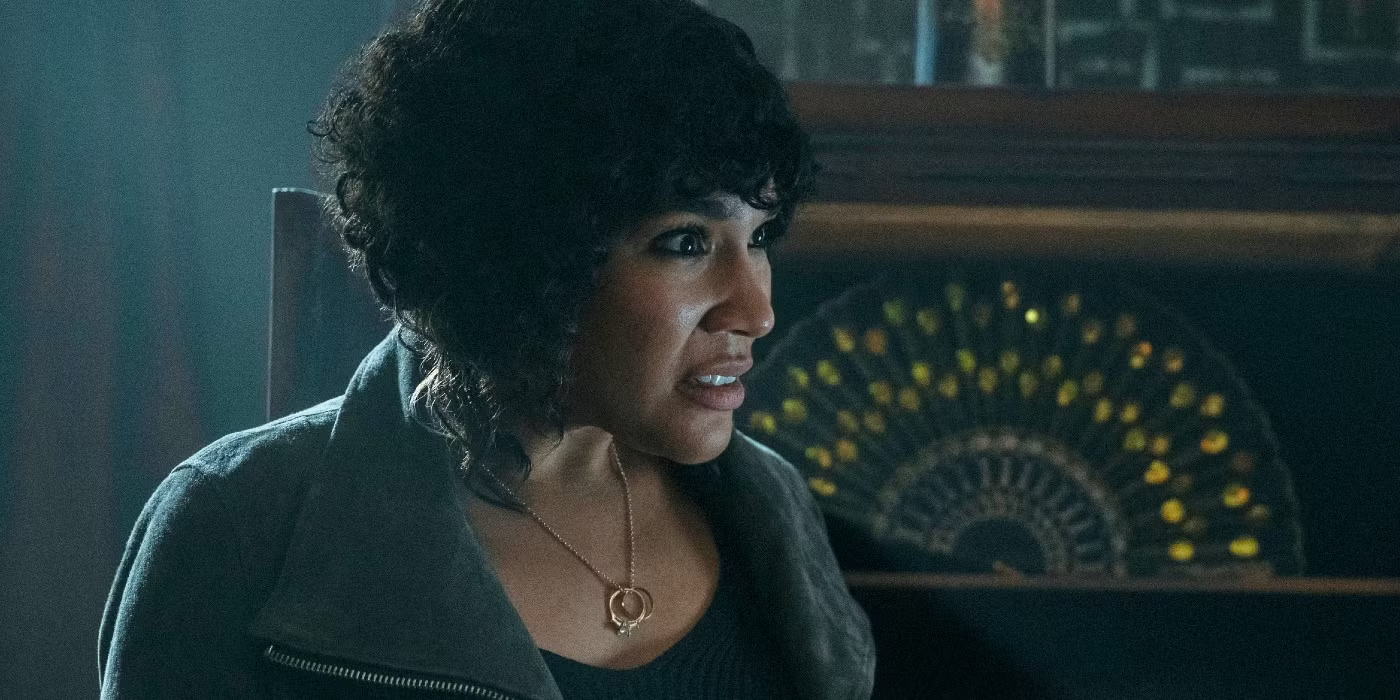 Allison’s power — “I heard a rumor…” — is one of the most frightening in the family. With a whisper, she can warp reality itself. Psychologically, it mirrors her deepest need: a desire for control. In Season 1 she used it lightly, in Season 2 she avoided it out of guilt, and in Season 3 grief drove her to abuse it again, even against her siblings. Every phase shows how closely her morality is tied to her emotions.
Her breakdown in Season 3 was her darkest turn, as she manipulated Luther and lashed out at Viktor (Elliot Page). But having burned those bridges, Allison (Emmy Raver-Lampman) may now be more self-aware of how dangerous she can be. Still, whenever she feels powerless, her instinct is to seize control with her words — and that’s a dangerous reflex. Her redemption arc is shaky, and one more devastating loss could tip her right back into villain territory.
Klaus (The Séance)

Klaus (Robert Sheehan) is chaos personified, but his chaos is rooted in trauma. From childhood, he’s been haunted by the dead, and drugs, humor, and constant distraction are how he numbs the noise. His abilities make him one of the most unsettling Hargreeves — he can summon, channel, even command spirits — but his lack of stability means those powers often spiral out of his control.
The danger is already glaring: in Season 1, he nearly let spirits overwhelm him; in Season 2, he accidentally started a cult. Klaus doesn’t crave power; he craves escape, comfort, love. But that desperation is exactly what makes him a liability. If the world ends again, Klaus isn’t the one plotting it — he’s the one who could trigger it without meaning to.
Viktor (The White Violin)

Viktor is what happens when neglect and repression meet unchecked power. For most of their life, they were told they didn’t matter, sidelined by their siblings and gaslit by Reginald. That constant dismissal cracked in Season 1, unleashing a cataclysm. It cracked again in Season 2, proving fragility can be just as dangerous as malice.
Viktor doesn’t want to destroy the world — but heartbreak, betrayal, or loneliness can unravel them in an instant. Their powers don’t answer to logic; they answer to emotion. One fracture in their stability, and history could repeat itself. Viktor isn’t high on this list because of intent, but because their psychology makes them the sibling most vulnerable to tipping into catastrophe again.
Ben (The Horror)

The Sparrow version of Ben (Justin H. Min) is what bitterness looks like when it takes root. Unlike his original counterpart, this Ben isn’t softened by compassion. He’s driven by resentment, convinced he’s been overlooked, and determined to claw his way to dominance.
His powers — grotesque tentacles that erupt from within — already make him terrifying. But what elevates his villain potential is his intent. Ben pushes, tests, and schemes because he wants to be feared. Unlike Diego, who craves recognition, or Allison, who craves control, Ben wants submission. For him, stepping into villainy wouldn’t be a fall. It would be a coronation.
Five (The Boy)
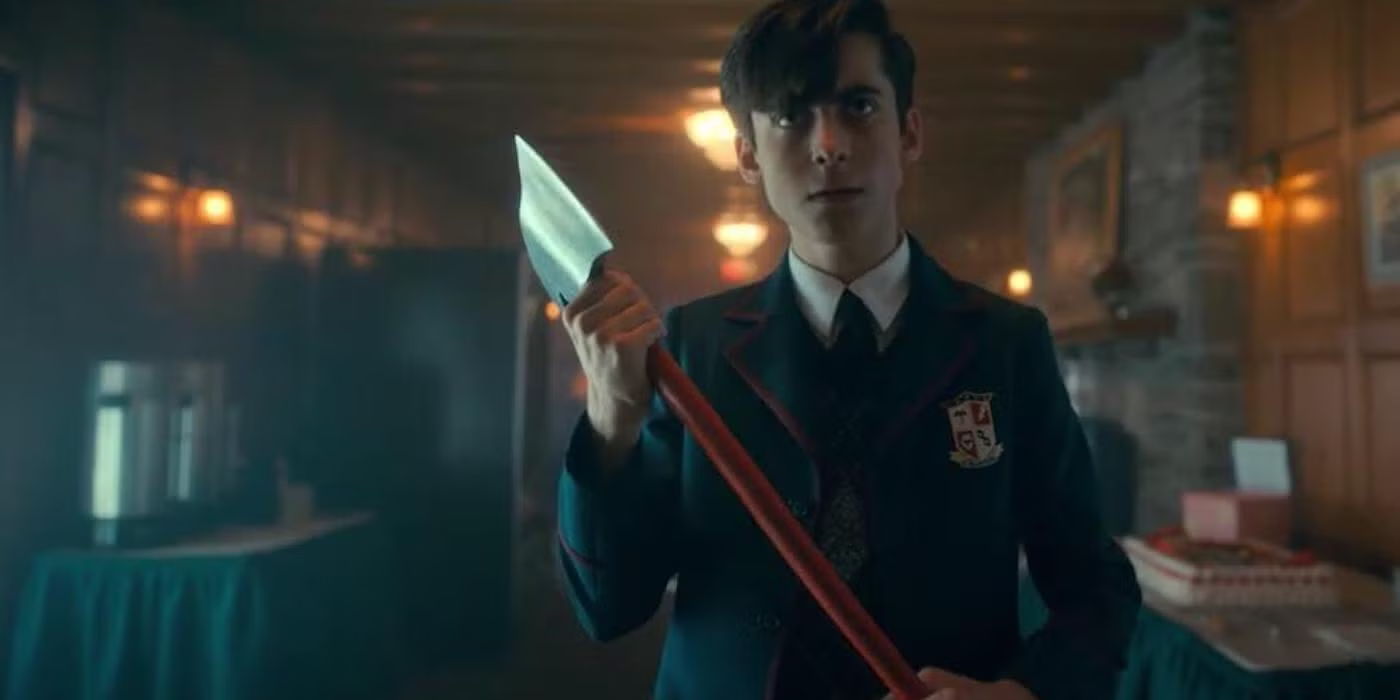
Five (Aidan Gallagher) doesn’t need to “snap” into villainy — he’s already there. Abandoned in an apocalypse, hardened as a Commission assassin, his entire psychology is utilitarian. Outcomes matter, morality does not. His history leaves little doubt: the Commission massacre, the countless unnamed kills across timelines, the cold calculations he makes without flinching.
Five doesn’t agonize like Viktor or spiral like Klaus. He weighs, he decides, he acts. The only thing keeping him tethered is his family — and even then, his patience with them is paper-thin. If those ties ever broke, Five wouldn’t need a villain arc. He’d just stop pretending he wasn’t one all along.
Have we overlooked anything? Stream The Umbrella Academy on Netflix to weigh things yourself.

